

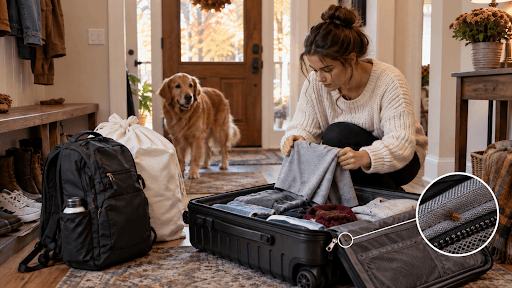
Fall Break means laundry, home-cooked meals, and a few days away from campus. It can also create an opportunity for bed bugs to move from dorms, apartments, hotels, or shared living spaces into a family home by hitchhiking on belongings.
Students do not need to see a bed bug for one to travel with them. Checking luggage, backpacks, bedding, and clothing before those items spread through the house can help Cicero families reduce the chance of bringing an unnoticed problem home.
A few bed bug travel prevention steps can reduce how widely belongings move through the home before they are checked.
Why Fall Break Creates a Bed Bug Travel Opportunity
College life involves a lot of movement.
Students may travel between:
- Dorm rooms
- Apartments
- Shared houses
- Classrooms and study spaces
- Hotels
- Friends’ homes
- Cars, buses, and other transportation
- Their family home
Being in any of these places does not mean a student will encounter bed bugs. The risk is tied to whether bed bugs are actually present and whether belongings come into contact with infested areas or items.
Can college students bring bed bugs home during Fall Break?
Yes. Bed bugs can hitchhike in luggage, backpacks, clothing, bedding, and other belongings without being immediately noticed.
That does not mean every student returning from a dorm is carrying bed bugs. The practical goal is simply to reduce the opportunity for an unnoticed hitchhiker to move from travel belongings into bedrooms and upholstered areas.
A Bed Bug's Ideal Travel Itinerary
Consider a simple scenario.
A student’s backpack sits next to a bed or upholstered chair in a room where bed bugs are present.
The student packs for Fall Break.
The backpack goes into a car.
Once home, it lands on the bedroom floor or bed.
An unnoticed bed bug leaves the bag and finds a new hiding place nearby.
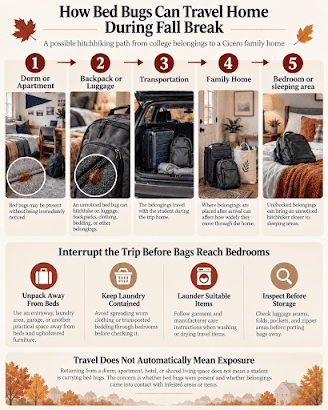
The journey can look like this:
There does not need to be a dramatic infestation at the starting point for movement to occur. Bed bugs are small, hide in narrow spaces, and can be difficult to spot when belongings are packed quickly.
The 5 Items Students Bring Home That Deserve a Quick Check
You do not need to inspect every possession with the same intensity. Start with items that spend time near beds, upholstered furniture, floors, or shared living spaces.
1. Backpacks
Check seams, folds, pockets, zipper areas, and fabric edges.
Backpacks frequently move between dorm rooms, classrooms, lounges, vehicles, and homes, making them worth inspecting before they are placed on a bed or sofa.
2. Laundry Bags
Laundry bags are easy to overlook because the contents are already headed for the washer.
Check the outside, seams, handles, and folds before carrying the bag through bedrooms or setting it on upholstered furniture.
3. Suitcases
Look around zippers, seams, pockets, handles, lining edges, and other protected folds.
After unpacking, avoid immediately storing luggage beneath a bed or in a bedroom closet if there is reason to suspect exposure.
4. Bedding
Sheets, blankets, pillowcases, and other bedding may have spent extended time in a sleeping area.
Keep transported bedding separate until it can be inspected and laundered according to the item’s care instructions.
5. Storage Bins
Dorm transitions often involve plastic bins, fabric containers, boxes, and other storage items.
Inspect edges, lids, handles, and contents before carrying them into bedrooms or long-term storage areas.
Dorm Rooms Aren't the Only Possible Source
Dormitories often receive the most attention because many students live close together and regularly move belongings between rooms. But potential exposure is not limited to dorms. Apartments, shared housing, hotels, friends’ homes, and other places where people sleep or keep belongings can also be involved when bed bugs are present.
This distinction matters because blaming a dorm can create false confidence.
A student living off campus can still encounter bed bugs. A student whose dorm has no known problem can potentially pick them up while traveling elsewhere.
Pests in dorm rooms are only one part of the broader travel risk.
The more useful question is: Where have the student’s belongings been, and were they near a place where bed bugs might have been present?
Bed Bug Travel Prevention Starts Before You Unpack
When there is a known or suspected exposure, avoid carrying everything directly to the bedroom.
A simple arrival routine can limit how widely belongings are distributed before they are checked.
Step 1: Create an Unpacking Area
When practical, use a garage, laundry area, hard-surface entry space, or another location away from beds and upholstered furniture.
Inspect luggage and bags before moving them farther into the house.
Step 2: Separate Laundry
Keep worn clothing and transported bedding contained rather than dropping items onto bedroom floors, beds, or sofas.
Wash items according to their care labels.
Step 3: Use the Dryer Appropriately
Drying items with heat can be an important part of bed bug management when the material can safely tolerate it.
Follow the garment or manufacturer’s care instructions rather than exposing heat-sensitive belongings to temperatures that could damage them.
Step 4: Inspect Luggage Before Storage
Check seams, folds, pockets, zipper tracks, handles, and other hiding areas.
If there is a credible exposure concern, avoid storing unchecked luggage under the bed.
This routine is useful bed bug prevention because it limits the number of rooms and surfaces that travel items contact before inspection
What Parents Should Watch for After Fall Break
A student returning home without visible bugs does not automatically rule out exposure.
Over the following days and weeks, watch for recurring evidence around sleeping areas.
Possible signs include:
- Small dark spotting on sheets, mattress seams, or nearby surfaces
- Shed skins
- Live bugs around beds or upholstered furniture
- Repeated signs in the same sleeping area
- Unexplained skin reactions occurring after sleep
Bites alone are not enough to confirm bed bugs. Skin reactions vary from person to person and can have many causes.
Physical evidence around the sleeping area is more useful when determining whether a bed bug inspection may be appropriate.
Why Bed Bugs Often Go Undetected at First
Bed bugs are good at staying out of sight.
They tend to hide in narrow cracks and protected areas close to places where people rest. Early in a problem, there may be relatively little visible evidence.
Potential hiding areas include:
- Mattress and box spring seams
- Bed frames
- Headboards
- Furniture joints
- Baseboard gaps
- Upholstered furniture
- Cracks near sleeping areas
- Luggage and stored belongings
Activity is often associated with nighttime or periods when people are resting, which also makes casual observation difficult.
A small introduction can therefore go unnoticed until repeated signs begin appearing.
That is one reason suspected bed bugs after travel are better addressed by checking belongings and monitoring sleeping areas than by waiting for a larger problem to develop
Prevention Can Reduce the Need for More Extensive Treatment
It is easier to contain a suspected exposure before belongings have been unpacked throughout the house.
Early precautions can limit how many rooms travel items reach, make inspection easier, and help families recognize evidence sooner.
Prevention cannot guarantee that an exposure will never become an infestation.
It does, however, give families more control over what happens after a student returns home.
If there is a known exposure at a dorm, apartment, hotel, or other location, a bed bug inspection can help determine whether there is evidence of activity before homeowners attempt repeated do-it-yourself treatments.
What Cicero Families Should Know During College Travel Season
Students from Cicero may attend colleges throughout Illinois or travel to schools in neighboring states, returning home for Fall Break, weekends, holidays, or other visits.
The travel distance is not what determines the risk.
What matters more is the movement of belongings between shared living environments.
A student may move repeatedly between:
That makes a repeatable arrival routine more useful than relying on a one-time check. For Cicero families, consistent bed bug travel prevention is more useful than relying on precautions only after a suspected exposure.
Families can designate one unpacking area, keep travel laundry contained, inspect frequently used bags, and avoid placing luggage directly on beds.
For Cicero homeowners who suspect an introduction, professional residential pest control can help determine whether physical evidence of bed bugs is actually present and what treatment approach is appropriate.
A Quick Parent-and-Student Fall Break Checklist
Save this checklist somewhere both the student and family can use it.
Before Leaving Campus
- □ Check bedding and the area around the bed for suspicious signs
- □ Inspect backpack and luggage seams
- □ Keep worn clothing contained
When Arriving Home
- □ Unpack away from beds and upholstered furniture
- □ Launder suitable items according to care instructions
- □ Inspect luggage before storing it
During the Following Weeks
- □ Monitor bedding and sleeping areas
- □ Arrange an inspection if physical evidence continues appearing
A simple repeatable routine can reduce how widely belongings move through the home before they are checked.
When a Bed Bug Inspection Makes Sense
Professional inspection becomes more useful when there is more than a general concern.
Consider requesting one when:
- A student had confirmed or likely exposure
- Live bugs have been found
- Dark spotting or shed skins repeatedly appear near a sleeping area
- Multiple household members notice signs after the same travel period
- Evidence continues despite cleaning and monitoring
- You are unsure whether what you found is actually a bed bug
Inspection matters because treating the wrong pest wastes time and may allow the real problem to continue.
For families searching for pest inspection in Cicero, explain any recent college travel, known exposure, and where suspicious evidence has appeared. That context can help focus the assessment.
If professional treatment is needed, homeowners considering bed bug treatment in Chicago should expect recommendations to depend on the extent and location of the activity rather than on a one-size-fits-all plan.
A1 Pest Masters can inspect suspected bed bug activity and recommend next steps based on what is found.
Because each situation is different, treatment pricing is not presented as a fixed amount. Homeowners can call for a quote based on the property and extent of the problem.
Frequently Asked Questions
How soon would I notice bed bugs after Fall Break?
There is no single timeline. Some evidence may appear relatively quickly, while a small introduction can remain difficult to detect for a period of time. Monitoring physical signs around sleeping areas is more useful than relying on a specific number of days.
Do bites confirm that bed bugs came home with a student?
No. Skin reactions alone cannot confirm bed bugs, and people can react differently. Look for physical evidence around sleeping areas and consider an inspection if suspicious signs continue.
Keep Fall Break From Becoming a Bed Bug Problem
Fall Break should bring home laundry, stories, and time with family—not an unnoticed pest problem.
If a student has had a known exposure or you are finding suspicious signs after travel, A1 Pest Masters can inspect the sleeping area and belongings, determine whether bed bug activity is present, and recommend an appropriate treatment plan.


