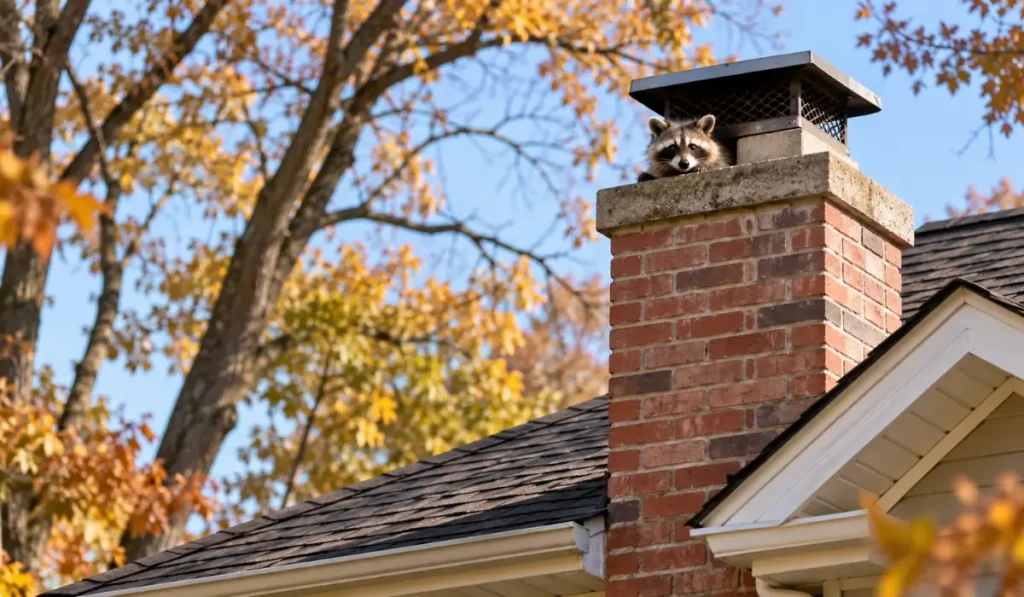
Scratching, thumping, or movement inside your chimney could mean a raccoon has found a sheltered place to rest or den. For homeowners considering raccoon removal River Forest, identifying the animal and its entry point is safer than trying to force it out.
A-1 Pest Master has served the Chicago metro area, including the South and West Suburbs, since 1984. Homeowners dealing with chimney activity can turn to our raccoon removal services when professional wildlife control is needed.
Why Chimneys Look Perfect to a Raccoon
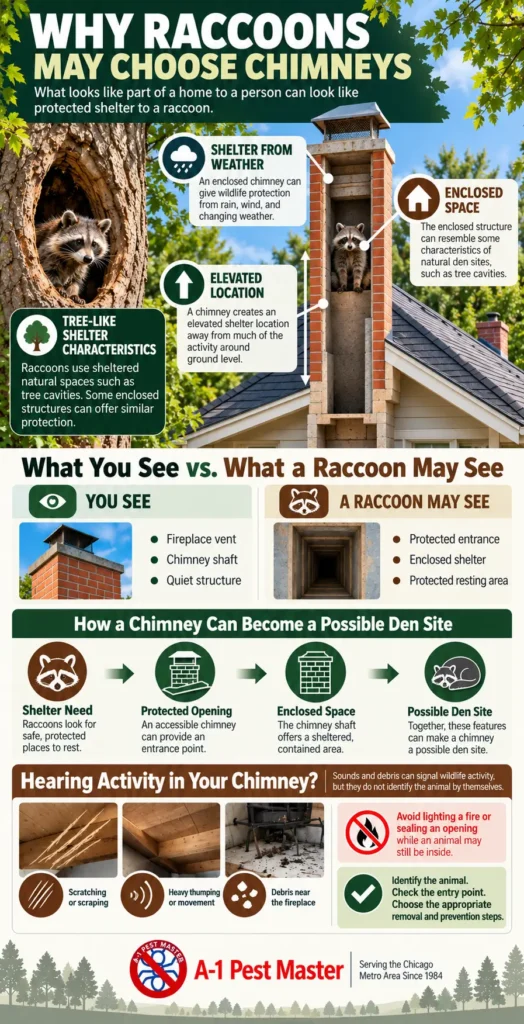
Your chimney may look like a fireplace feature, but to a raccoon, it can resemble a protected den.
| You See | A Raccoon May See |
|---|---|
| Fireplace vent | Protected entrance |
| Chimney shaft | Enclosed den |
| Quiet structure | Sheltered resting place |
The findings help explain the appeal of enclosed shelter. An accessible chimney may offer similar protection, although its construction and condition determine whether wildlife can enter.
The November Shelter Rush
Colder, unpredictable November weather makes protected shelter valuable to wildlife. Chimneys can attract raccoons for several reasons:
Weather protection: Enclosed spaces offer shelter from rain and wind.
Elevated position: Height separates wildlife from some ground-level disturbances.
Accessible opening: An uncapped chimney may provide an entry point.
Tree-like structure: The enclosed shaft resembles some natural denning spaces.
The Illinois Department of Natural Resources identifies chimneys and attics among the residential spaces raccoons may enter.
5 Signs a Raccoon May Already Be in the Chimney
Raccoon movement may sound heavier than smaller wildlife activity, but sounds alone cannot confirm the species.
- Scratching or scraping: Repeated sounds against the chimney interior.
- Heavy thumping: Noticeable movement or shifting inside the structure.
- Dusk or nighttime activity: Sounds during periods when raccoons are often active.
- Unusual fireplace odors: Possible waste, debris, or nesting material.
- Falling debris: Leaves, twigs, or other material appearing near the fireplace.
What these signs mean: Birds, squirrels, and other animals can cause similar symptoms. A professional wildlife removal assessment can help identify the source before action is taken.
Why River Forest Chimneys Can Attract Raccoons
River Forest’s mature trees, established neighborhoods, and older homes can bring wildlife habitat close to residential structures.
Several property features deserve attention:
Overhanging branches: May provide access to rooflines.
Uncapped chimneys: Can expose an opening to wildlife.
Aging exterior materials: Damaged soffits or roof components may create entry opportunities.
Connected tree cover: Can support wildlife movement through residential areas.
These conditions do not automatically indicate an infestation. The concern increases when nuisance wildlife enters a chimney, attic, or another protected part of the home.
What Homeowners Should Never Do Before Raccoon Removal
Trying to force an animal out can create safety risks or leave wildlife trapped inside.
Never light a fire to drive it out. Heat and smoke can injure an animal and create additional hazards.
Never seal an occupied opening. An animal or dependent young could become trapped.
Never attempt direct removal. Threatened raccoons may bite or scratch.
Never climb onto the roof without proper equipment and training. Wet or icy conditions increase fall risks.
Immediate safety tip: Keep the fireplace out of use. If safe, keep the damper closed to reduce the chance of an animal entering the living space.
The CDC’s rabies prevention guidance recommends avoiding direct contact with wild animals and seeking prompt medical guidance after possible exposure.
Why Chimney Problems Often Lead to Attic Problems
A raccoon near the chimney may also encounter other roof-level openings. This does not mean every chimney problem will develop into an attic infestation.
What a Roof-Level Wildlife Inspection May Check
Chimney: Accessible openings and surrounding roof conditions.
Vents: Damaged or unprotected ventilation openings.
Soffits and fascia: Loose or deteriorated exterior components.
Roof intersections: Gaps or damaged areas that could allow entry.
Attic: Signs of activity when an accessible route is suspected.
If wildlife has reached the attic, attic wildlife removal may need to address both the animal and its entry point.
Related homeowner insight: Similar roof-access concerns are covered in our guide to keeping squirrels out of your attic in Berwyn. Although squirrels and raccoons have different behaviors, checking vulnerable openings is important when addressing either problem.
Humane Wildlife Removal and Preventio
Effective raccoon removal addresses the animal, its entry point, and conditions that could allow future intrusion.
How a Professional Assessment Works
Identify the animal: Confirm the species and location of activity.
Inspect access points: Evaluate the chimney and other vulnerable exterior areas.
Determine appropriate removal: Consider animal welfare, property conditions, and applicable regulations.
Plan exclusion: Address openings after confirming that wildlife is no longer inside.
Recommend prevention: Evaluate chimney caps, repairs, and possible cleanup needs.
What About Humane Wildlife Relocation?
Humane wildlife removal and humane wildlife relocation are not always the same. Relocation may be restricted or inappropriate under Illinois wildlife regulations.
A qualified wildlife-control professional should select a lawful, species-appropriate approach, including checking for dependent young when relevant.
How to Help Prevent Another Intrusion
Once the chimney is confirmed clear, consider these preventive measures:
Install a properly fitted chimney cap when appropriate.
Repair damaged roof and exterior openings.
Evaluate branches that provide easy roof access.
Arrange chimney cleaning or repairs if contamination or damage is found.
Chimney modifications must be compatible with the fireplace system. A qualified chimney professional may be needed for installation or repairs.
Frequently Asked Questions About Raccoon Removal
Why Do Raccoons Enter Chimneys?
Raccoons may enter chimneys because they resemble protected natural den sites. An accessible chimney can provide an enclosed, elevated space sheltered from weather and some outside disturbances.
Can Raccoons Damage Chimneys?
Yes. Raccoon activity can contribute to debris accumulation, odors, contamination, and potential blockages. Damage to chimney components or nearby roofing may also occur. The actual condition should be evaluated before deciding what repairs or cleaning are necessary.
Is Raccoon Chimney Activity Common in November?
Raccoons may use protected spaces during November as colder weather makes shelter valuable. However, chimney denning is not limited to fall, and November should not automatically be described as the peak season. Signs of activity matter more than the calendar alone.
When Is Professional Raccoon Removal Necessary?
Professional assistance is appropriate when an animal appears to be inside the chimney, its location cannot be confirmed safely, or removal would involve direct contact, roof access, or the risk of trapping wildlife inside.
What’s the Safest Solution?
Avoid using the fireplace, handling the animal, or sealing an occupied opening. A professional wildlife assessment can identify the animal, evaluate entry points, and recommend appropriate removal and prevention measures.
Get Help With Raccoons in Your River Forest Chimney
A noisy chimney may indicate wildlife activity that requires attention. Identifying the animal and its entry point helps determine whether removal and prevention are necessary.
A-1 Pest Master has served the Chicago area since 1984, offering pest control and wildlife removal services. Homeowners can also read our customer reviews to learn about other customers’ experiences.
Request a wildlife inspection or call (773) 737-6939 to discuss suspected raccoon activity at your River Forest home.