Chicago homeowners may still need a cockroach exterminator in fall or winter because heated buildings can supply the warmth, moisture, food, and shelter roaches need. Cold outdoor temperatures do not necessarily stop an indoor cockroach infestation.
That distinction matters when roaches appear long after summer has ended. Instead of assuming winter will solve the problem, look at the conditions inside the property and the signs that reveal where activity may be concentrated.
The Biggest Winter Roach Myth
The EPA’s cockroach information notes that cockroaches seek food, water, warmth, and shelter and often occupy areas near food preparation and moisture. That is why outdoor temperature alone does not tell you what is happening inside a home.
A Roach's Winter Survival Strategy
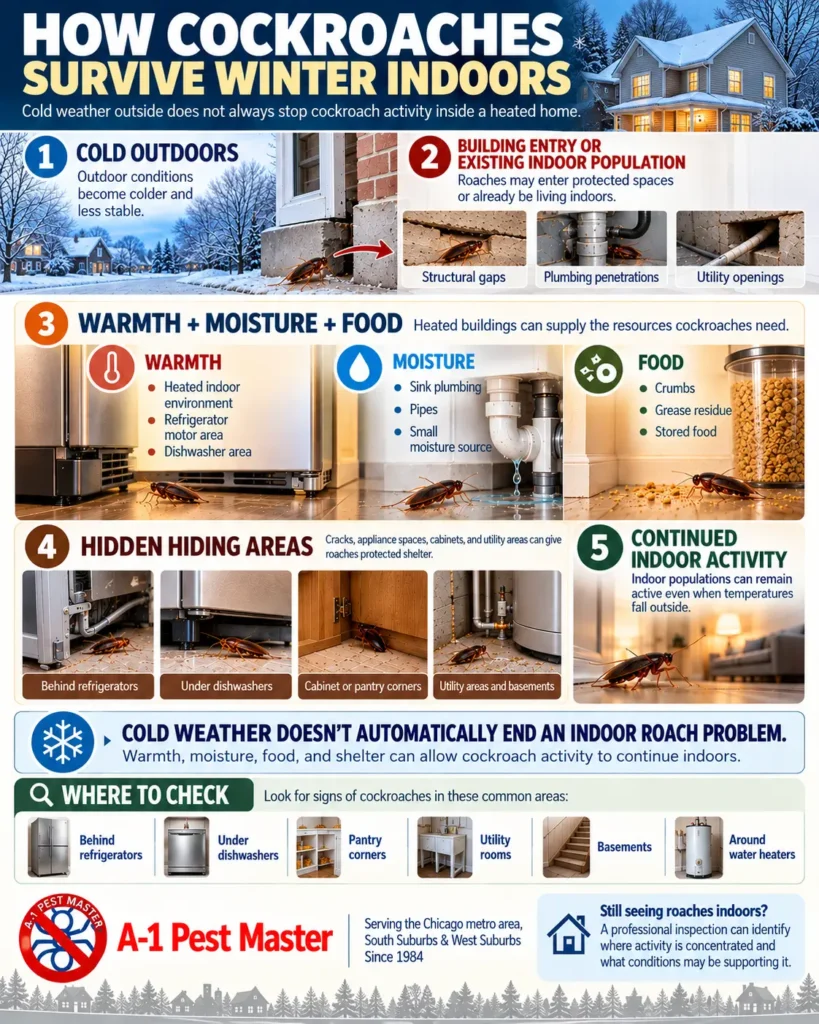
As outdoor temperatures fall, heated buildings can continue providing the resources cockroaches need. Roaches already living indoors may remain close to these favorable conditions.
Their winter survival depends on four essentials:
Warmth: Heated rooms, appliances, and protected building spaces.
Moisture: Water around sinks, pipes, drains, and plumbing leaks.
Food: Crumbs, grease, spills, and improperly stored products.
Shelter: Cracks, cabinet gaps, appliance spaces, and other hiding areas.
Cold weather outside does not automatically mean unfavorable conditions indoors. The University of Minnesota’s cockroach recommendations emphasize reducing food, water, and hiding places as part of effective management.
Why Kitchens Become Roach Headquarters During the Holidays
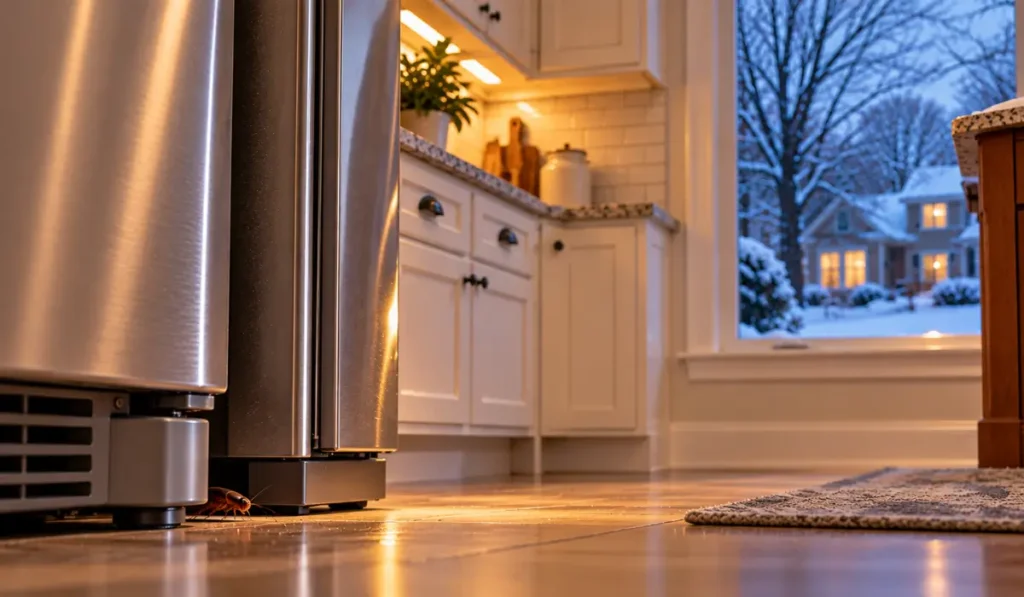
Holiday cooking can make kitchens especially attractive to cockroaches already living inside a home.
Common contributing conditions include:
Extra food storage: More pantry items and food packaging.
Frequent cooking: Additional crumbs, grease, and spills.
Busy kitchens: Dishes and food residue left between meals.
Increased moisture: Water around sinks, dishwashers, and plumbing.
Hidden shelter: Warm spaces behind appliances and cabinets.
The 6 Places Roaches Hide During Cold Weather
Roaches tend to stay close to shelter and the resources they need. Checking likely hiding areas can reveal activity that is easy to miss during a quick look around the room.
- Behind refrigerators: Warmth, crumbs, grease, and nearby moisture can make this area attractive.
- Under dishwashers: Heat, plumbing, and hidden gaps create sheltered conditions.
- Pantry corners: Stored food and small spills may support activity.
- Utility rooms: Pipes, drains, and equipment can create protected spaces.
- Basements: Moisture and undisturbed hiding areas may support roaches.
- Around water heaters: Warmth and nearby plumbing can create favorable conditions.
A useful inspection looks for patterns. Where roaches appear, what resources are nearby, and how they may be moving can matter as much as the sighting itself.
A professional cockroach exterminator can use those clues to determine whether activity appears isolated or warrants closer investigation.
Why Repeated Daytime Roach Sightings Deserve Attention
Cockroaches are generally more active at night, so repeated daytime sightings deserve closer attention.
Possible explanations include:
Crowding: Competition for available hiding spaces.
Disturbance: Cleaning, repairs, or movement around harborages.
Resource competition: Roaches searching for food or water.
Established activity: A hidden population occupying multiple areas.
A single daytime sighting does not establish infestation size. Repeated sightings, droppings, egg cases, and activity across several rooms provide stronger evidence.
The Illinois Department of Public Health’s cockroach information also addresses common hiding areas and the importance of sanitation and exclusion in cockroach control.
Evergreen Park Homes and Cold-Weather Roach Activity
Evergreen Park homeowners may continue seeing cockroaches after outdoor temperatures fall because kitchens, basements, and other heated spaces can remain suitable for indoor populations.
Property conditions worth checking:
Older plumbing areas: Leaks and condensation may supply moisture.
Basements and utility rooms: Protected spaces can provide shelter.
Shared walls: In connected housing, accessible gaps may allow pests to move between units.
Indoor heating: Warm temperatures can support established populations.
Cabinet and appliance gaps: Concealed spaces may provide harborages.
Local homeowner insight: The age or location of a property does not establish an infestation. Repeated sightings, droppings, egg cases, and moisture conditions are more useful indicators.
A-1 Pest Master serves the Chicago metropolitan area and surrounding suburbs. Homeowners can review our Chicago-area service locations when checking coverage.
The Holiday Hosting Test
Before guests arrive, check the places where food, water, and hidden shelter come together. A few minutes of focused observation may reveal signs that are easy to overlook during normal household routines.
Look for:
- Droppings inside cabinets or near appliances
- Unusual odors in areas with suspected activity
- Roaches near sinks, refrigerators, or dishwashers
- Egg cases or shed material in sheltered areas
- Activity near food storage
Finding one sign does not tell you the full extent of the problem. Several signs in different areas create a stronger reason to investigate where roaches are hiding and what is supporting them.
Why DIY Treatments Often Seem Successful at First
Killing a visible cockroach can make a treatment appear successful, even when hidden activity remains.
What surface-level treatment may miss:
Hidden harborages: Roaches sheltered behind appliances or inside cracks.
Egg cases: Reproduction may continue despite fewer visible adults.
Food and moisture: Conditions supporting activity remain unchanged.
Connected spaces: Roaches may occupy areas beyond the treatment location.
What a Professional Roach Inspection Looks For
A professional inspection focuses on the conditions supporting cockroach activity and the evidence showing where the problem is concentrated.
Key inspection points include:
Harborages: Cracks, cabinets, appliance spaces, and other sheltered areas.
Moisture: Leaks, condensation, and plumbing conditions.
Food sources: Crumbs, grease, spills, and storage practices.
Entry points: Gaps and openings that may allow pest movement.
Population indicators: Droppings, egg cases, and shed material.
Activity patterns: Locations and frequency of sightings.
These findings help a cockroach exterminator in Chicago determine whether a problem is localized or requires broader treatment.
Homeowners comparing pest control in Chicago should look for an inspection-based approach. Residential pest control in Chicago may involve targeted treatment, sanitation recommendations, and follow-up based on the infestation.
A-1 Pest Master’s pest control services address multiple household pest concerns.
Why Roach Problems Rarely Stay Isolated
Food, moisture, openings, and shelter that support cockroaches may also create favorable conditions for other household pests.
Related concerns may include:
Rodents: Food access and structural openings can also attract rats and mice.
Ants: Food residue and moisture may support ant activity.
Moisture-associated pests: Damp conditions may favor other insects.
Finding roaches does not prove that these pests are present. However, identifying the underlying conditions can support broader prevention.
Our rodent removal services address rats and mice when evidence indicates a separate problem. For a seasonal comparison, see our article about Chicago cockroach activity in summer.
Frequently Asked Questions
Why am I still seeing roaches when it’s cold outside?
Heated indoor spaces can continue supplying food, water, warmth, and shelter after outdoor temperatures fall. Roaches established indoors may therefore remain active during winter.
Do cockroaches die in winter?
Cold conditions can affect outdoor cockroach activity, but indoor populations may survive in protected, heated environments. The conditions inside the building matter more than outdoor temperature alone.
Is seeing one roach a problem?
One sighting does not prove there is a large infestation. Repeated sightings or other evidence, such as droppings or egg cases, warrant closer attention.
Why do roaches appear more often around the holidays?
More cooking, food storage, crumbs, grease, dishes, and moisture can make existing activity easier to notice. Keeping food areas clean and addressing moisture can reduce resources available to roaches.
Additional answers about pest treatments and service concerns are available in our pest control FAQs.
Roaches Don’t Always Stop When Winter Starts.
Cold weather does not necessarily end an indoor cockroach problem. Warmth and shelter inside a home may allow activity to continue.
Repeated sightings, droppings, or activity around appliances may indicate hidden conditions supporting an infestation. Our team can review your concerns and discuss appropriate next steps.